

Automotive Industry

Updated: Nov 5
What Is The Automotive Industry?
In terms of expertise and capability, the automotive industry has evolved and technologies such as 3D glasses, haptic sensors and AR heads up displays have entered the vocabulary of traditional suppliers.
The automotive industry was one of the first to develop global supply chains, and those supply chains have only continued to become more complicated. Moreover, the safety challenges that underlie these trends are not going away but instead, require confrontation.
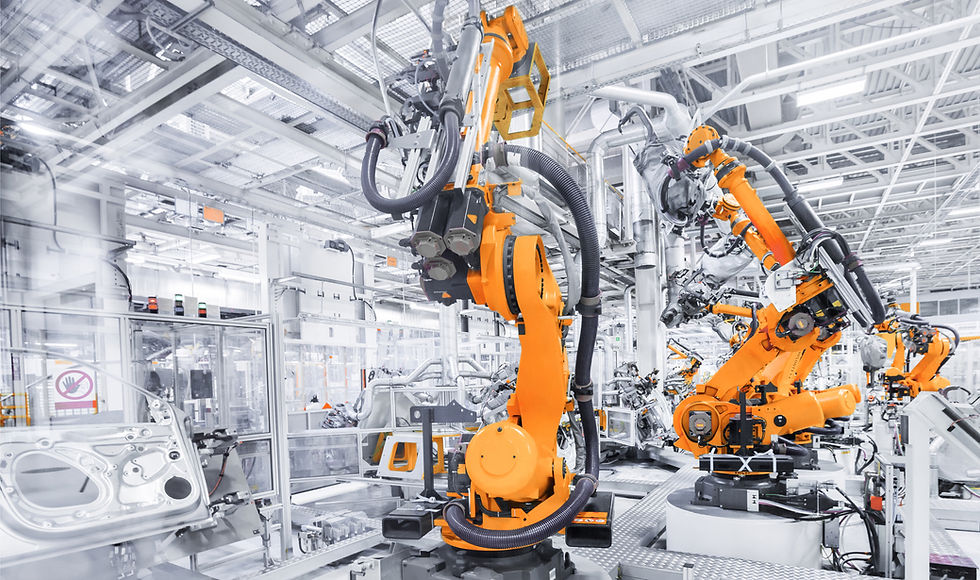
In an automotive industry, the factory floors are busy and bustling places of manufacturing robots and equipment. They contain moving machineries and thousands of workers, and both work in collaboration. It’s a challenge to maintain this complex supply chain and so, health and safety of employees tops the agenda.
Exposure to toxic gases, flammable vapours, fire and other hazardous conditions while working in the automotive industry is a risk to the individuals health.
What Are The Gas Risks in Vehicle Workshops?
Vehicle workshops, paint shops and production lines are full of gas hazards that cannot be seen or smelled at dangerous levels. Running engines release carbon monoxide (CO), which builds up quickly in enclosed bays, pits and test areas. Spray booths and parts-cleaning areas release solvent and fuel vapours (VOCs), and many of these are flammable as well as toxic.
Electric and hybrid vehicles bring new risks. Charging and damaged lithium-ion batteries can release hydrogen (H2) and toxic gases such as carbon monoxide and hydrogen fluoride, and air conditioning work involves refrigerant gases that displace oxygen in pits and enclosed spaces.
Which Gas Detector Do I Need?
Use a single gas CO monitor for technicians working around running engines and exhaust extraction. Use a 4-gas monitor (O2, LEL, CO and H2S) for inspection pits, tanks and any confined space. Use a PID monitor to measure solvent and paint vapour exposure in spray booths, and fixed gas detection for permanent protection in battery charging rooms, paint mixing rooms and fuel stores.
Whichever you choose, bump test portable monitors before use and have them calibrated at the interval the manufacturer recommends (six months is common). We supply, hire and calibrate all the leading brands, so your detectors are always ready to alarm.
What is the Fire Triangle?
Oxygen, heat, and fuel are frequently referred to as the ‘Fire Triangle.’ This is a simple equation that refers to the presence of oxygen, fuel matter and heat to create fire.

However mostly forgotten is the addition of the fourth element, the chemical reaction.
The important thing to remember is that if take any of these four things away you will not have a fire or the fire will be extinguished!
What Are The Risks of Fire?
The motor industry is a working environment that contain high levels of fuel. This is one of the three elements that make up the fire triangle (along with a source of ignition and a source of oxygen). This makes monitoring of fire hazards within this area even more important.
The fuels that are highly flammable and present the most immediate and obvious fire hazard throughout the automotive industry include the following:

Petrol
Solvents
Paints
Engine oils
When working with these fuel materials other chemicals are exposed as a result of chemical reactions which could put individuals in close proximity at risk of exposure. The risk increases again if there is a lack of ventilation or detection as this can lead to fuel toxins being allowed to ‘build up’ within the atmosphere thus displacing other elements that make up the air that we breathe.
Lack of due diligence when handling petrol is a particular risk, and individuals working in motor industry must take extra care when draining fuel tanks. To avoid unwanted exposure we would advise that you wear a portable gas monitor, this will monitor your working atmosphere and alarm if levels increase above a pre-calibrated threshold.
Heat and Spark Emitting Equipment
The motor industry uses heat emitting equipment or machinery, such as soldering irons and spark-generating saws, these activities must be carried out in regulated conditions well away from flammable materials. Irradiation of this machinery is not liable due to its industry so we must mitigate risk by early detection especially when using this type of equipment.
This is simply because the heat/spark emitting equipment can complete the fire triangle causing a risk of fire. Due to the logistics of these activities, incidents whereby fire occurs due to a spark or heat can put the individual working at serious risk and could be fatal.

Early detection would indicate the change in the immediate atmosphere giving the individual live data so they can risk assess dynamically. This saves time for employers and individuals.
Using a portable gas monitor can also be benefitial for Exposure Control Plans (ECP).
By using a portable gas monitor individuals can track their chemical exposure data live. This data is really important when considering ECP's as they must be bespoke for each operational site.
"I think I may need Safety Instrumentation Monitoring, but I don’t know anything about it!"
You don’t need to understand Safety Instrumentation Monitoring to be safe at work! If you are unsure whether you need a monitor, please call one of the team on the below number.

Call The Team: 01489 326031
You cannot create the need for Safety Instrumentation, the need is either there or isn’t – that why the best way to make sure you are keeping yourself and your own team as safe as possible is to give one of our experienced team members a call! You can speak to us about your site and our team will be able to advise you based off extensive working knowledge, existing and pre-existing clients/projects and industry specific hazards. Our team remain informed in the world of Safety Instrumentation so that we can provide up to date advice in line with best practices. This means whenever you speak to our team you know you are receiving updated support from people who care.
"Our work should enrich our lives, not cost them" - Alex Graft (Managing Director)
Next steps with 7 Solutions
Read our guide to 4 gas monitors explained. Browse 4 gas monitors, single gas monitors and gas detector hire, or book calibration for any make of gas detector from £40 + VAT. Call 01489 326031.
Comments